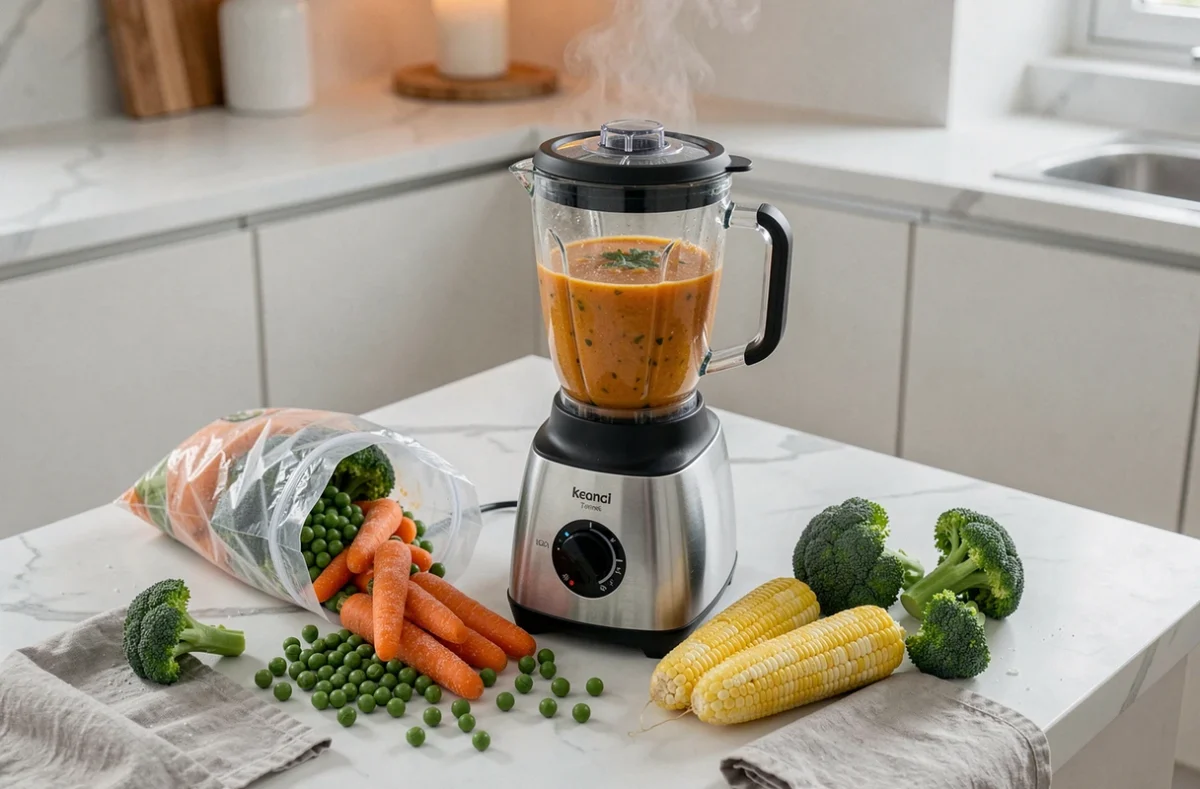
A bag of frozen vegetables, a soup maker, some water and twenty minutes later, a steaming bowl of velvety soup is ready. This shortcut is winning over more and more time-pressed cooks, and one question comes up often: does the result really measure up to soup made with fresh vegetables? The answer depends less on the frozen vegetables themselves than on how you use them in the appliance.
Texture in a soup maker: why frozen vegetables behave differently from fresh ones
Fresh vegetables cut into pieces release their water gradually as they cook. Frozen vegetables, on the other hand, release a large amount of water in the first few minutes as the ice crystals melt. This extra liquid dilutes the soup unless you reduce the amount of water you add at the start.
For a velvety soup made with frozen courgettes, for example, it’s best to use a good third less liquid than the recipe calls for when using fresh vegetables. You can then adjust at the end of the programme if the consistency seems too thick.
The other difference lies in the vegetables’ cell structure. Freezing weakens their fibres, so frozen vegetables soften more quickly and need less cooking time. A programme that runs for too long produces a bland, watery soup. On most soup makers (Moulinex, Philips and others), the “velouté” programme is sufficient without extending the cooking time.
Have you noticed that a mix of frozen broccoli and carrots doesn’t have the same texture as a leek and potato mix? That’s normal. Vegetables with a high water content (courgette, tomato, spinach) break down almost completely, while root vegetables (carrot, turnip, parsnip) hold their shape better. Choosing the right mix for your preferred result—smooth or slightly textured—makes all the difference.
When you want to use frozen vegetables to make soup, adjusting the water-to-vegetable ratio is the first thing to do, even before choosing a programme.
Nutritional value of frozen vegetables in homemade soup
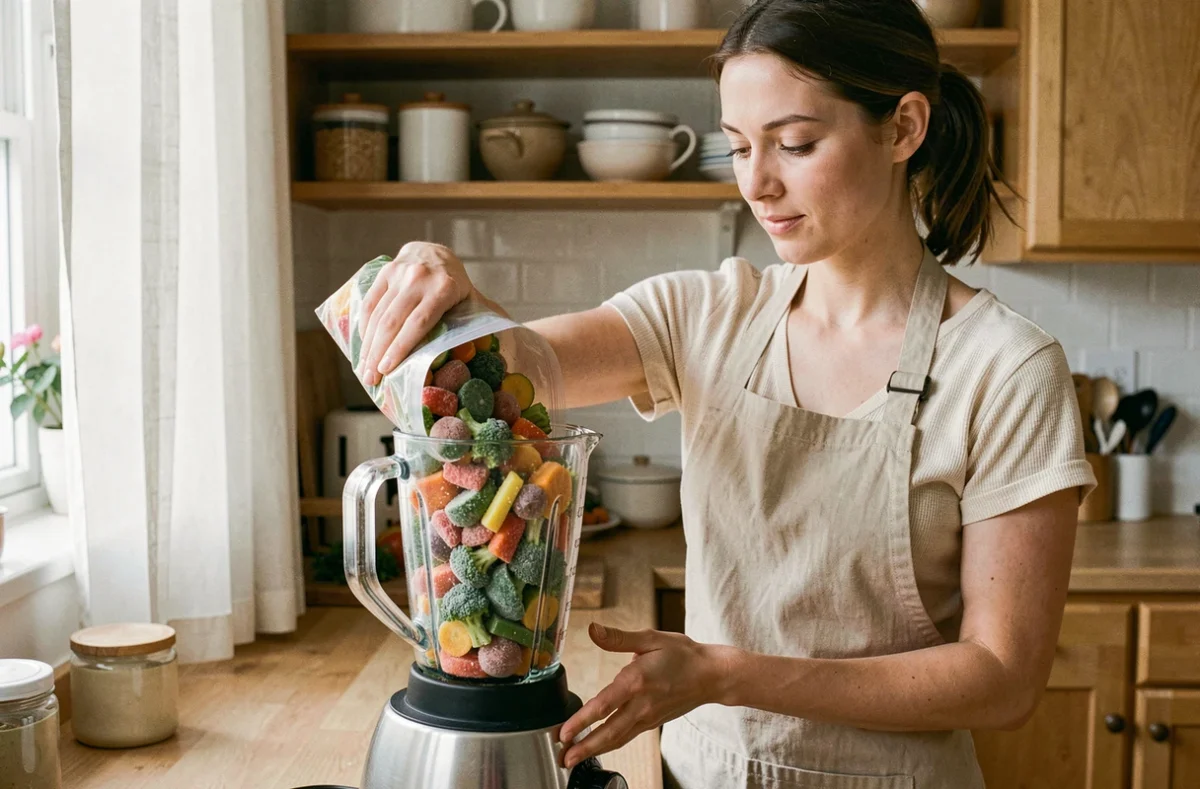
The idea that frozen vegetables are nutritionally inferior to fresh ones needs some qualification. Vegetables destined for freezing are harvested when ripe, then blanched and frozen quickly. This process preserves a good proportion of their vitamins and minerals.
By comparison, “fresh” vegetables left in the fridge for several days gradually lose nutrients, particularly vitamin C, which is sensitive to light and oxygen. Properly stored frozen vegetables often compare favourably with fresh vegetables that have been kept for several days.
Soup has a particular advantage over other cooking methods. Water-soluble vitamins (vitamin C and B vitamins) pass into the cooking liquid. When you drain green beans after boiling them, those vitamins go down the sink. In a soup maker, the broth stays in the jug and ends up in your bowl. Velouté soup retains the vitamins dissolved in the liquid.
That benefit doesn’t mean you should extend the cooking time. Prolonged exposure to heat degrades heat-sensitive nutrients, regardless of the vegetables’ initial state.
Practical adjustments for different soup makers
Not all soup makers handle frozen vegetables in the same way. Some models have a temperature sensor that starts blending once the contents are hot. With frozen vegetables, the temperature rises more slowly, which can extend the cycle without you noticing.
Precautions before starting the programme
- Never fill the jug above the maximum mark: melting ice crystals add volume during cooking, and an overflow can damage the motor or seals
- Avoid adding frozen vegetables in a solid block: roughly separating them by hand before adding them helps them cook evenly and reduces the risk of the blending motor overheating
- Add a drizzle of olive oil or a spoonful of cream at the end of the programme rather than at the start: fat added too early can foam and interfere with the level sensor on some appliances
Stock or water: which liquid should you use?
Water works well with mixes that are already seasoned (frozen vegetable stir-fry mixes with herbs, for example). Homemade stock or a dissolved stock cube adds plenty of flavour to a plain vegetable mix. Frozen vegetables don’t have the flavour that develops when fresh vegetables are sautéed, and stock makes up for the difference.
A simple tip: sauté a finely chopped fresh onion in the jug (if your soup maker has a “sauté” function) before adding the frozen vegetables. This aromatic base gives the velouté more character without making the recipe complicated.
Frozen vegetable soup maker recipes: three combinations that work well
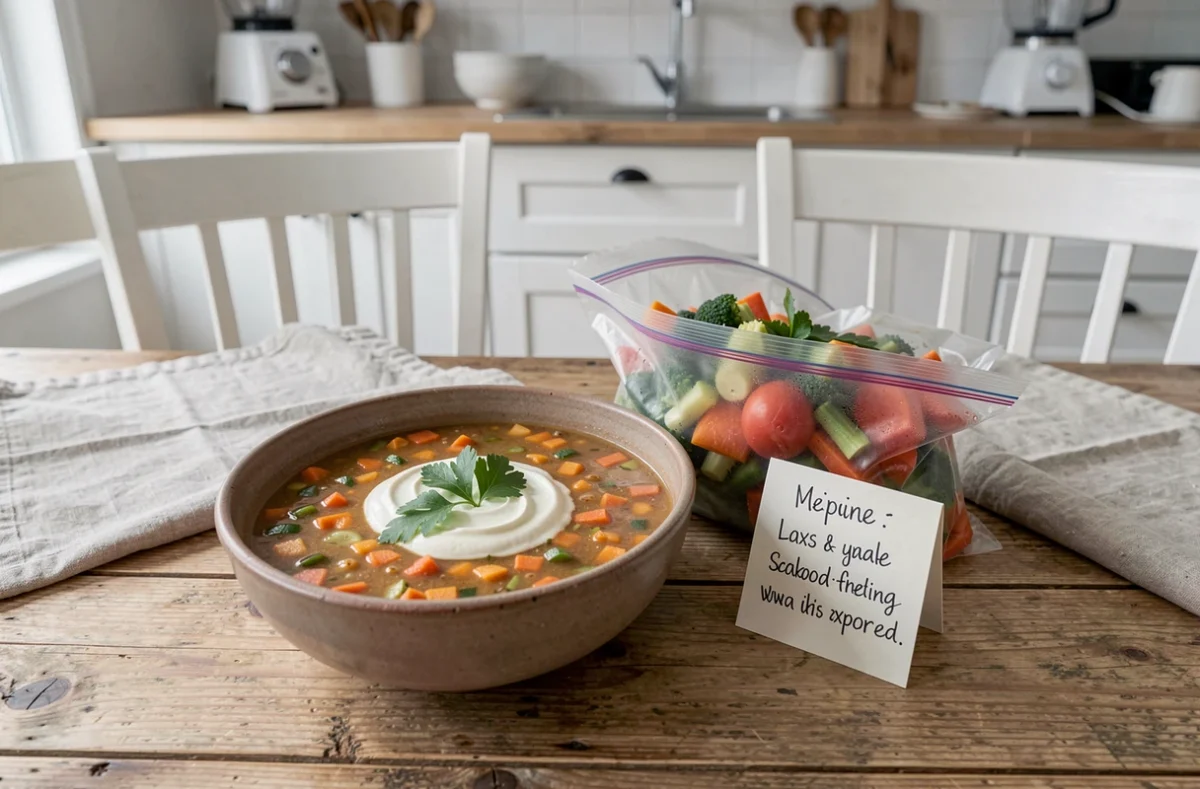
Rather than listing dozens of recipes, here are three tried-and-tested combinations that make the most of frozen vegetables in a soup maker.
- Butternut squash and carrot velouté: these two root vegetables retain enough body after thawing to make a thick velouté without adding potato or another starchy ingredient. A pinch of cumin at the end of cooking is all it takes to bring out the flavour
- Spinach, courgette and garlic soup: frozen spinach breaks down almost instantly and adds a vibrant colour. Courgette mellows the flavour. Add two crushed garlic cloves with the stock for extra depth
- Minted pea velouté: frozen peas retain their sweet flavour well. Add a few fresh mint leaves after blending, once the heat is off, to preserve their aroma
In every case, the shortest cooking time offered by the soup maker gives the best result. Extend it only if any pieces are still firm after the first cycle.
Frozen vegetables in a soup maker need neither thawing beforehand nor any special technique. Use less liquid, shorten the cooking time and make up for the loss of flavour with stock or a sautéed base: these three adjustments are all it takes to make a velouté that compares with fresh vegetable soup, in a fraction of the preparation time.