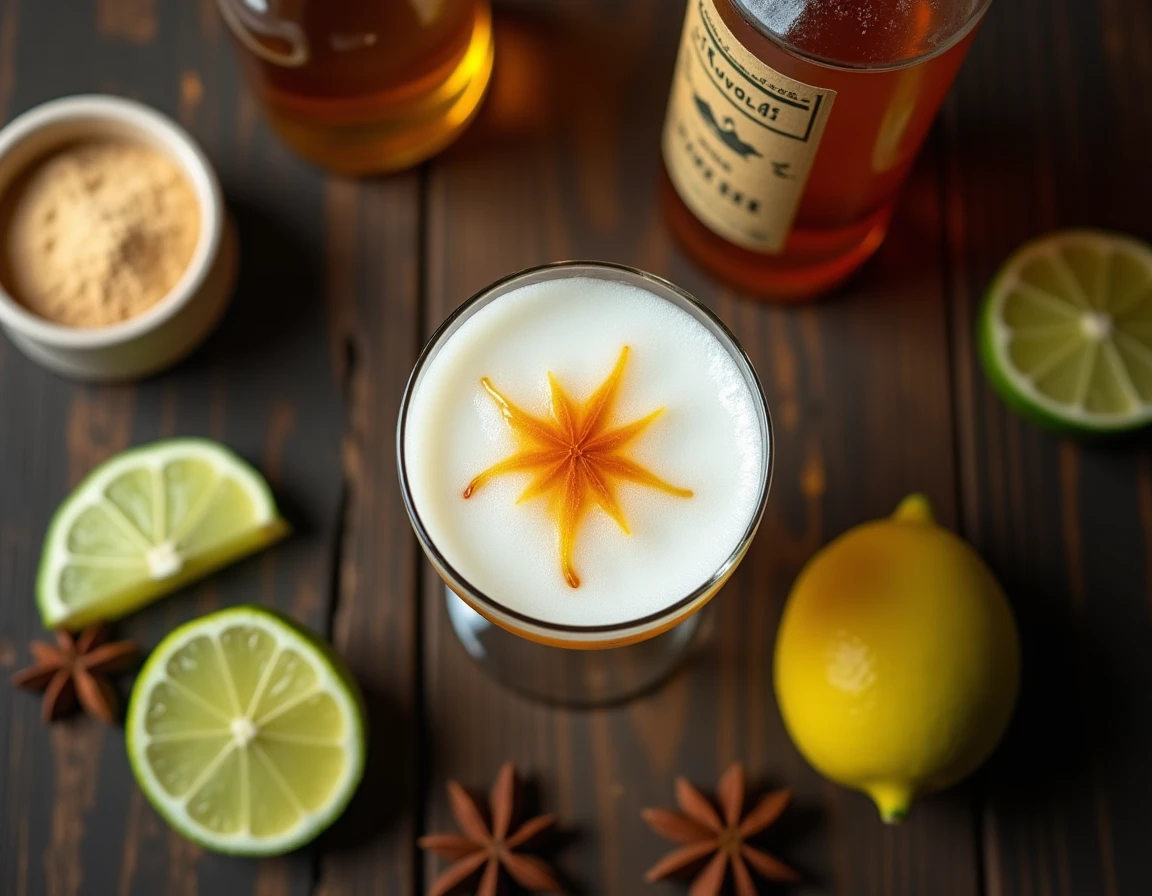
The aguardiente sour is a Colombian cocktail built on a base of aguardiente, a sugarcane spirit flavored with anise. Its uniqueness lies in the use of panela (unrefined cane sugar) instead of simple syrup, and an egg white that produces a thick foam on the surface. This cocktail extends an ancient Andean tradition of mixing cane, spices, and aguardiente.
Panela and canelazo: the roots of the Colombian aguardiente sour
Most sour recipes use a white sugar syrup. In Colombia, panela replaces neutral syrup and radically changes the cocktail’s profile. This whole cane sugar, sold in hard blocks at Colombian markets, brings notes of caramel, molasses, and a slight vegetal bitterness absent from a simple syrup.
This choice is not trivial. In the Colombian Andes, hot drinks like canelazo have long mixed panela, cinnamon, and aguardiente. Guarapo, a fermented drink made from cane juice, shares the same lineage. Using panela in an aguardiente sour aligns with this heritage, not just sweetening a drink.
To prepare the panela syrup, simply melt a grated block in an equal volume of hot water, then let it cool. The consistency should be that of a thick but pourable syrup. This syrup keeps for several days in the refrigerator. Anyone wishing to taste a Colombian aguardiente sour starts with this syrup, which is the true signature of the cocktail.
Aguardiente Antioqueño, Nectar or Cristal: choosing the right bottle
Aguardiente is not a uniform product. In Colombia, each department produces its own brand, and the taste differences are pronounced. The three most common names are Antioqueño, Nectar, and Cristal.
Antioqueño, originating from the department of Antioquia, is undoubtedly the most widespread internationally. Its anise profile is pronounced, with a sweet roundness. Nectar, often associated with the Cundinamarca region, offers a more subtle anise character and a slightly drier texture. Cristal, produced in the Valle del Cauca, falls somewhere in between.
One point not to overlook: some brands offer versions with and without added sugar. The unsweetened version yields a drier and more vibrant sour, where the anise stands out more. The sweet version produces a rounder, almost dessert-like cocktail. Thus, the choice of bottle influences the final balance of the cocktail as much as the measurement of the other ingredients.
Double shake technique for a successful aguardiente sour
The egg white is the most confusing component for novices. It adds no perceptible flavor to the cocktail, but it creates that creamy and dense foam that characterizes all South American sours.
The Colombian technique relies on a double shake (or dry shake followed by a wet shake):
- Pour the aguardiente, fresh citrus juice (lime or lemon depending on the version), panela syrup, and an egg white into a shaker without ice. Shake vigorously for about twenty seconds to emulsify the egg white.
- Then add full ice cubes, and shake again for another twenty seconds to chill the mixture without diluting it too much.
- Strain with a double strainer (cocktail strainer plus fine strainer) to achieve a smooth texture, free of ice shards or egg strands.
The foam should form a layer about one centimeter thick on the surface. If it remains thin and bubbly, the first shake without ice was too short. This first ice-free step determines the texture.
Serve cold: the often-ignored Colombian rule
In Colombia, aguardiente is traditionally consumed very cold, often taken straight from the freezer. This habit is not limited to shots: it also applies to the sour. Freezing the bottle a few hours before preparing the cocktail reduces the sensation of alcohol burn and softens the anise.

An aguardiente at room temperature produces a sour where the alcohol dominates and the anise becomes almost medicinal. A chilled aguardiente yields a silkier cocktail, where the panela and citrus express themselves better. This is not a detail for purists; it is a difference that any palate perceives from the first sip.
The glass used also matters. In Colombia, the sour is served in a short, stout glass, like an old fashioned, not in a champagne flute or a stemmed glass. This short and wide format allows for better appreciation of the foam and keeps the cocktail cold longer due to a favorable surface-to-volume ratio.
Citrus and garnish: lime, lemon, or orange
Colombian recipes do not all agree on the citrus. Lime (limón in Colombia) is the most common choice. Some versions use lemon, while others add fresh orange juice to soften the acidity.
Lime accentuates the contrast with the anise, while orange creates a more accessible and fruity cocktail. Mixing the two citrus fruits (half lime, half orange) produces an intermediate balance that works well with sweet versions of aguardiente.
For the garnish, a slice of lemon or a zest is sufficient. Some add a pinch of cinnamon on the foam, nodding to the canelazo of the Andes. This gesture is not merely decorative: the aroma of cinnamon mingles with the anise as soon as the nose approaches the glass, reminding one of the hot drink of which the Colombian sour is, in a way, the cold cousin.
The Colombian aguardiente sour derives its uniqueness from three elements that international recipes often overlook: panela instead of white syrup, the bottle taken from the freezer, and the choice of a regional aguardiente that influences everything else. Changing any of these three parameters is enough to produce a different cocktail.