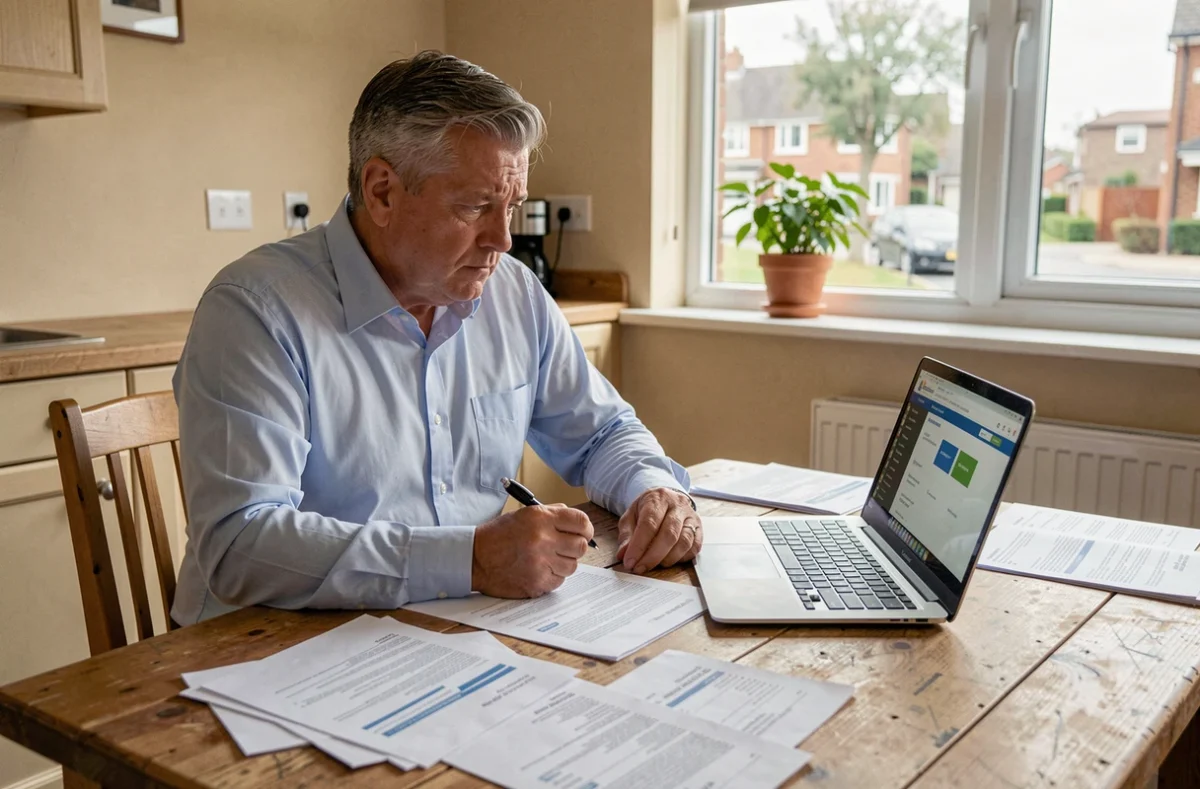
A tenant discovers that their car loan application has been rejected, even though their previous payment incident was settled more than a year ago. When checking their file with the Banque de France, they find that the lending institution never removed their FICP listing. Before looking for alternative financing, the first step is to check whether the listing is still justified and challenge it if it is not.
Check and remove your FICP listing before applying for a loan
People often think an FICP listing is an insurmountable barrier. In practice, a listing may be incorrect or remain in place beyond the legal time limit. The credit institution that originally reported the incident must request its removal as soon as the debt has been repaid in full.
If this step has not been taken, it is up to the individual to act. Anyone can check their file with the Banque de France free of charge by visiting a branch with proof of identity or by mail. The statement provided shows the listing date, the reporting organization and the reason for the listing.
If the payment incident has been resolved but the listing has not been removed, you can send a written complaint to the lending institution. It has a deadline to submit the removal request to the Banque de France. If it refuses or does not respond, you can contact the French Data Protection Authority (CNIL) to exercise your right to rectification.
Loan options for people listed with the FICP become much broader once the listing is removed, so it is worth taking the time to check before submitting multiple credit applications.

Personal microloan: the most accessible financing option for people listed with the FICP
When the listing is confirmed and early removal is not possible, a personal microloan remains the most common financing option. Unlike a conventional loan, approval is not based solely on checking the FICP.
How it works and who provides it
A personal microloan is a small loan, generally capped at a few thousand euros, for people excluded from the traditional banking system. It funds specific projects, such as buying a vehicle to get to work, vocational training or household equipment.
Support from an approved nonprofit organization is required to prepare the application. Organizations such as Adie, the French Red Cross and some local social services offices guide applicants and act as guarantors with the partner bank.
- Adie offers microloans with comprehensive support, including for people listed with the FICP, at moderate rates compared with conventional consumer credit.
- La Banque Postale provides personal microloans in partnership with local organizations, available in most departments.
- The French Red Cross and some CAF offices can direct applicants to microloan programs or one-off assistance, depending on their circumstances.
Practical limitations of microloans
The amount granted will not cover a property purchase or a significant cash-flow need. Processing times vary depending on the organization and partner bank and can sometimes take several weeks. A microloan is not a substitute for a conventional bank loan; it is intended for a specific, limited need.
Peer-to-peer loans and pawn loans: two options to consider on a case-by-case basis
Besides microloans, two other forms of financing are worth considering, although each comes with its own constraints.
Peer-to-peer loans
A loan from someone you know or through a dedicated platform does not involve an FICP check. This option works for modest amounts. A written loan agreement (acknowledgment of debt) is necessary once the amount exceeds a few hundred euros, if only to protect both parties in the event of a dispute.
Any peer-to-peer loan above a certain threshold must be declared to the tax authorities. Failure to meet this requirement can expose both the lender and the borrower to tax reassessments.
Municipal pawnshop loan
Municipal credit unions, found in several major cities, offer loans secured against valuables such as jewelry, watches and works of art. The FICP is not checked because the loan is secured by the item deposited. The amount lent is a fraction of the item’s estimated value, at a regulated interest rate.
This option is suitable for an urgent cash-flow need, but you must own a valuable enough item. The item is returned in full once the loan has been repaid.

Debt consolidation and sale with a repurchase option: solutions for homeowners listed with the FICP
Homeowners have additional options, even while their FICP listing is active.
Mortgage-backed debt consolidation
Some specialist providers agree to consolidate the debts of a borrower listed with the FICP by taking out a mortgage on their property. This can reduce the overall monthly payment and, if the debts that led to the listing are paid off, result in the FICP listing being removed. The interest rate is generally higher than for conventional debt consolidation because the provider still considers the risk significant.
Sale with a repurchase option
Governed by the French Civil Code, this arrangement involves temporarily selling your property to an investor while continuing to live in it. The proceeds from the sale are used to repay debts. The seller then has a set period—often contractually agreed at between six months and five years—to buy back the property at the agreed price.
A sale with a repurchase option can clear debts, remove the FICP listing and allow you to recover your property. However, it is complex and costly (notary fees and a discount on the sale price), making it a last resort rather than a first step.
An FICP listing blocks access to conventional bank credit, but not to every form of financing. Check that your listing is valid, explore microloans or pawn loans, and, if you own property, consider mortgage-backed debt consolidation or a sale with a repurchase option: the right solution depends on your circumstances. The most worthwhile step is often the one people overlook: challenging a listing that is no longer justified.