In 2023, less than 2% of global tourism flows directly benefited local communities. Yet, traditional travel organization models continue to fuel economic and environmental inequalities, despite a growing demand for responsible alternatives.
Some initiatives are reversing this logic by placing fair exchange and cooperation at the heart of practices. These often little-known approaches involve strict rules and concrete commitments, far from mere displays of good intentions. They require a profound rethinking of travel habits and the relationships between visitors and hosts.
Why rethink our ways of traveling in light of current challenges?
Mass tourism is expanding, and behind the postcard, the ecological footprint is increasing. Impossible to overlook: according to the World Tourism Organization, nearly 8% of global greenhouse gas emissions come from the sector. In light of this, traveling differently becomes a collective responsibility.
More and more travelers are turning to forms of responsible tourism to reduce pressure on the planet and support the areas they visit. Sustainable tourism is making its way, focusing on reducing carbon footprints, boosting local economies, and discovering cultural diversity.
Choosing alternatives like Tourisme Solidaire, whose principles are detailed on the dedicated page, means opting to experience sharing and respect, far from consumerist reflexes. This often changes habits: train instead of plane, staying with locals, small groups, human-scale activities.
This model revisits the very meaning of travel: what place for the visitor, what effects on local societies, what balance between discovery and preservation? Reflecting on one’s choices also means considering a sustainable development that combines exchanges, respect for residents, and care for the environment.
The key principles of solidarity and responsible tourism
Solidarity tourism is not just a simple sidestep. It relies on reciprocity, respect, and places the encounter with local communities at the heart of the journey. Fair tourism fits into this logic, offering travelers the opportunity to support real local development dynamics.
Several principles structure this approach; here are its foundations:
- Sharing benefits: a substantial part of the price of the stay goes to solidarity projects or local initiatives, whether in education, health, or the preservation of natural and cultural heritage.
- Involvement of local populations: residents are fully engaged in the project. They participate in decision-making, organization, and ensure the relevance of actions, which guarantees the continuity of impacts.
- Respect for cultures and ecosystems: each step of the solidarity journey seeks to limit pressure on the environment and to value local know-how, without caricature or exploitation.
The notion of responsibility goes beyond just the relationship with nature. It also engages the mindset of the traveler: listening, supporting, and a willingness to bring about a concrete improvement in living conditions on-site. These approaches are often rooted in fair trade and rely on recognized labels.
Choosing this kind of responsible travel means integrating into a shared momentum where positive impact takes precedence over accumulation, and where human experience is coupled with concrete acts of solidarity.

Changing the way we travel: concrete examples and tips for getting involved
Adopting a solidarity journey changes the perspective on the territories crossed. Initiatives are multiplying: some associative networks and local collectives open the door to stays in immersion with locals. In France, for example, platforms offer the chance to spend the night in villages and support the educational projects that arise there. This is not just a slogan: each experience nourishes encounters, the transmission of knowledge, and direct participation in environmental or social projects.
Here are some ideas for getting concretely involved in this path:
- Favor eco-responsible accommodation: labeled lodgings, stays with locals, educational farms where ecological dimensions go hand in hand with support for host communities.
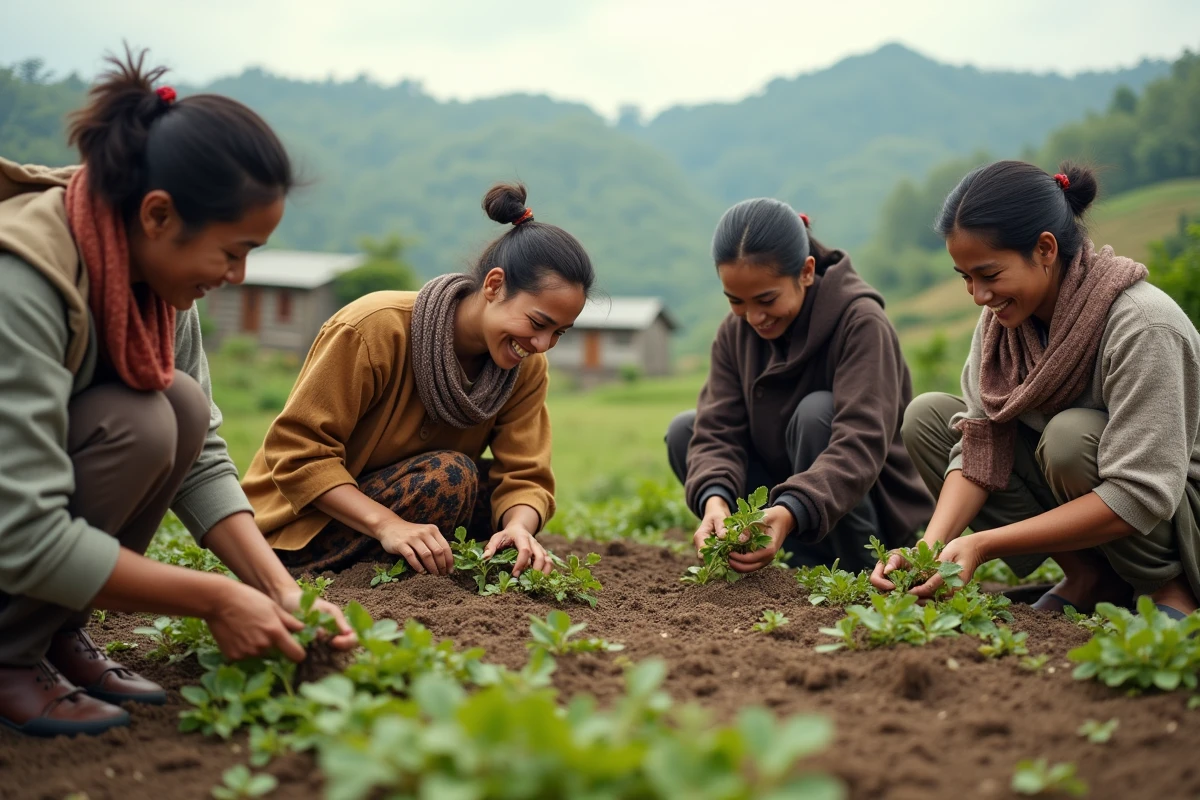
- Turn to participatory travels, where one gets involved in collective life, heritage restoration, the transmission of local practices, or support for initiatives in agroecology or natural resource management.
But traveling differently also means questioning one’s modes of transport. Opt for trains, bicycles, or walking to limit your carbon footprint. Carefully prepare your stay: identify engaged actors, measure your impact, select activities that align with the local rhythm and respect the social fabric.
Authentic encounters cannot be scheduled. They arise outside marked circuits, in curiosity, listening, and openness. This way of traveling, far from the mass flow, changes the daily lives of residents while offering the traveler a unique way to inhabit the world. One returns with much more than memories: the impression of having, in one’s own way, changed the scenery and the story of a place.