
A child asking for a story before bed is not just trying to delay the lights going out. They are seeking a space to test emotions, explore unknown situations, and manipulate ideas without real consequences. Engaging children’s stories have filled this role for centuries, long before the advent of screens or podcasts.
Why Some Stories Captivate Children More Than Others
You may have noticed that a child can ask for the same story ten times, then completely lose interest in a well-illustrated book? The difference rarely lies in the quality of the illustrations.
What hooks a young reader is a character facing a concrete problem. A dragon afraid of fire, a little girl who must cross a forest alone, a robot that doesn’t understand jokes. The child projects themselves into the character’s difficulty even before knowing the solution.
Rhythm matters as much as the subject. An engaging story alternates between calm passages and moments of tension. When the wolf knocks at the door, the text slows down. The child holds their breath. Then the action resumes. This back-and-forth between suspense and relief stimulates attention better than a linear narrative.
Parents and teachers looking for age-appropriate stories can consult the website histoire-enfant.fr for children, which offers texts designed to maintain this narrative hook mechanism.
A final often underestimated element: humor and the absurd work at any age. A four-year-old laughs at an elephant wearing socks. A nine-year-old laughs at a king who mixes up his speeches. Humor creates a bond with the story, and this bond encourages turning to the next page.

Children’s Imagination: What Active Reading Engages That Passive Screens Cannot Replace
In front of a cartoon, a child receives pre-made images. In front of a read or told story, they must create their own. This difference may seem trivial, but it mobilizes very different skills.
When reading to a child “the house was covered in green moss,” each child builds their own house. Some imagine a chalet, others a hut, others a tower. Reading forces the brain to produce images, not just consume them.
The report from the Youth Reading General States, presented on December 1, 2025, also reminds us that the competition from screens alone does not explain the decline in reading. Social, cultural, and cognitive barriers also come into play. Blaming only tablets simplifies a broader issue.
This observation changes the way we think about children’s stories. Rather than opposing books and screens, it is more effective to vary formats:
- An illustrated album for quiet moments, where the child observes the images and asks questions about what they see
- An audio story for car rides, which works on active listening and mental representation without visual support
- A tale told aloud by a parent, which adds an emotional connection and allows for tone adjustments based on the child’s reaction
Teenagers’ reading practices are transforming rather than disappearing. A child who listens to a narrative podcast and then draws the scene they imagined remains engaged in active creation.
Children’s Stories by Age: Adapting the Narrative Without Simplifying the World
A common trap is to reduce the complexity of a story on the grounds that the child is young. Traditional tales did not make this mistake. Little Thumb deals with abandonment. Cinderella speaks of abuse. These stories do not sugarcoat anything, but they wrap difficulty in a reassuring structure, with a clear resolution.
Adapting a story to age means adjusting the form, not the substance. For a three-year-old, we shorten sentences, increase repetitions, and use concrete images. For an eight-year-old, we introduce ambiguous characters, moral choices, and open endings.
Curiosity of Toddlers: The Power of Repetition
Between the ages of two and five, children love stories with a repetitive structure. The same event occurs three times with a variation. This pattern reassures them while creating anticipation. They anticipate what comes next, and this anticipation is an early form of logical reasoning.
Readers Aged Six to Ten: Nourishing Curiosity with Stories That Ask Questions
At this age, children begin to reflect on the motivations of characters. Why does the villain act this way? What would we do in the hero’s place? The best stories for this age group leave spaces for interpretation.
The PISA 2025 results reported by Le Monde show a more marked decline in reading comprehension among boys than girls in France. A 2025 study by the National Book Center confirms that the disavowal of reading particularly affects boys aged sixteen to nineteen. Offering stories with male characters facing real dilemmas (not just battles) can help maintain their interest.
Diversity and Representation in Children’s Stories
The Youth Reading General States also highlighted a clear demand: young people want more choice, diversity, and representation in the stories offered to them.
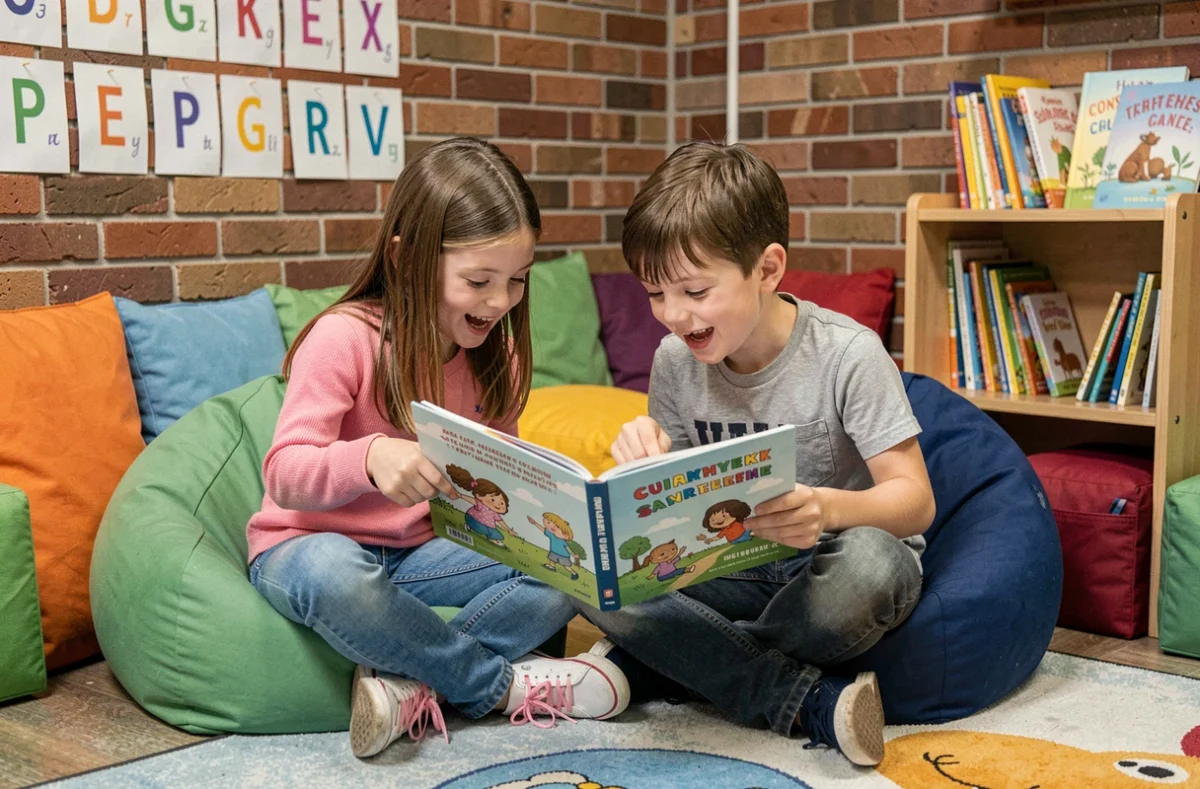
Specifically, this means characters that do not all look alike, varied geographical settings, and different family structures. A child who never sees themselves in a book eventually concludes that books are not meant for them.
Stories from Africa, Asia, or the Middle East offer narrative patterns different from classic European tales. A story where cunning prevails over strength, where the collective triumphs over the individual, or where an animal guides the hero expands the child’s narrative palette.
- West African tales often use a clever character (spider, hare) who resolves conflicts through intelligence rather than combat
- Asian narratives frequently incorporate nature as a character in its own right, raising environmental awareness without moralizing
- Native American tales play on the transmission between generations, placing the child in a narrative chain broader than their own story
Varying the origins of stories means varying the modes of thinking to which the child is exposed. It is not a question of quotas; it is a question of cognitive richness.
Choosing captivating stories for a child does not require a degree in children’s literature. Observing what makes them react, what prompts them to ask questions, what makes them say “again,” remains the best indicator. A story that provokes a question is always better than a story that merely provides an answer.