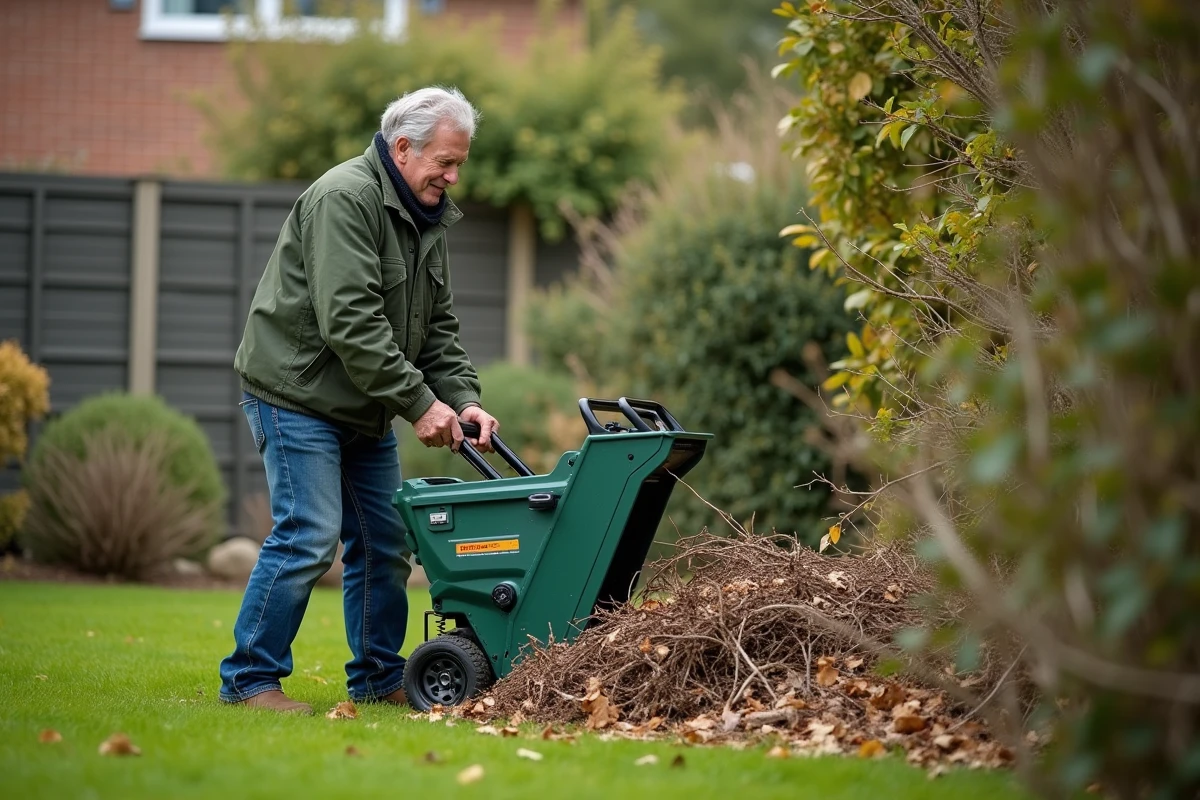
The power displayed on the label does not guarantee either the efficiency or the durability of a garden shredder. Some compact models outperform larger machines on thick branches, while systems known for their quietness prove unsuitable for wet waste.
The technical criteria, often highlighted, mask constraints related to maintenance, storage, and safety. Price differences do not always reflect reliability or actual processing capacity. Choices therefore involve a trade-off between performance, type of waste, and daily usage constraints.
The different types of shredders: which one really suits your garden?
First and foremost, it is about choosing the energy source best suited to your land and habits.
Electric or gas shredder? The electric shredder is appealing for its ease of use, light weight, and low noise level. It provides excellent service in small gardens, for regular maintenance, soft branches, and moderate volumes. No complicated start-up, minimal maintenance, and immediate handling: for most homeowners, it is the simple solution.
In contrast, the gas shredder asserts its power. Its gas engine effortlessly digests much thicker branches, up to 76 mm depending on the model. This type of device finds its place in large properties, at the back of an orchard, or on wooded land. The gas shredder handles hardwood, produces fragmented branch wood (BRF), and consumes large volumes without relying on an electrical outlet.
Shredding systems: blades or rotor?
The choice of cutting system determines performance against each type of waste. Here’s how to navigate:
- Rotary blades: ideal for shredding soft plant material and green waste. However, be cautious: they quickly show their limits on hard or forked branches.
- Rotor system: perfect for tackling thick branches. It ensures a stable flow, limits the risk of jamming, and maintenance remains accessible.
In summary, the branch shredder is chosen based on the quantity, nature of the plants to be processed, and the noise level you are willing to tolerate. For more information, the site broyeur-vegetaux.net offers a comprehensive file “Best Garden Shredder: Comparison 2024, Tests, and Reviews” to compare models suited to each scenario, from small urban gardens to forest management.
What to look for before buying: essential criteria and selection tips
Before purchasing a garden shredder, you must ensure that the machine truly fits your garden. The power of the motor, in watts for electric models and horsepower for gas models, determines its ability to consume branches and foliage. For domestic use, there’s no need to aim beyond 2500 W; on a wooded plot, a robust gas engine is essential.
The maximum branch diameter accepted by the shredder plays a central role in versatility. Some can handle branches up to 45 mm, while others stop at 30 mm. Accurately assessing your needs prevents blockages and frustrating disassemblies. The rotation speed also matters: the higher it is, the more homogeneous the mulch will be, ideal for mulching or composting.
To refine your selection, here are the criteria to check:
- Maintenance: choose a shredder that allows quick access to the blades or rotor, to easily dislodge residues and check for wear.
- Value for money: compare the purchase price, warranty duration, availability of spare parts, and user reviews on broyeur-vegetaux.net.
The volume of the collection bin, the management of green waste, and ergonomics (handles, wheels, maneuverability) also weigh in on user comfort, especially if you plan to use the shredder regularly. On the safety side, a few simple rules: hearing protection, monitoring noise levels, and carefully reading the manual before starting for the first time.
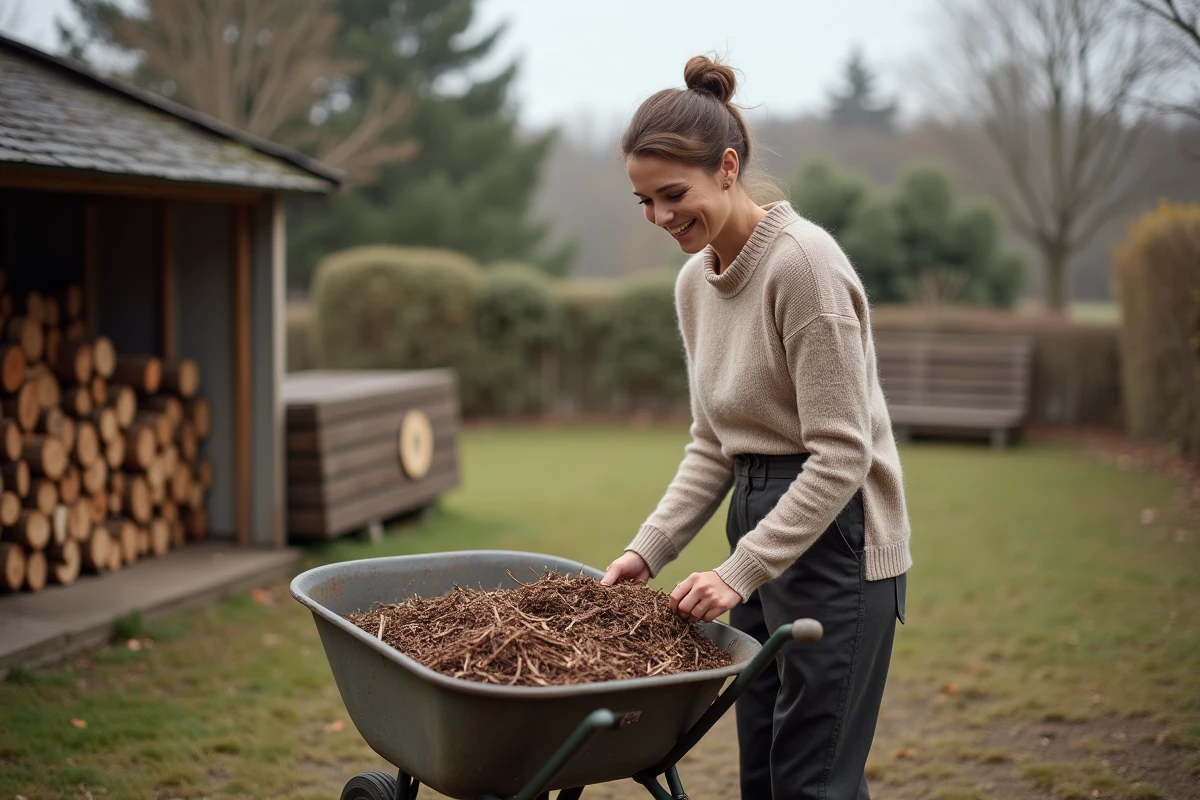
Comparison 2024: our selection of the best garden shredders according to your needs
In 2024, the range of garden shredders has significantly expanded. Now, every gardener can find a model suited to the size of their land and the amount of waste to process. From the maneuverable electric shredder to the endurance-focused gas shredder, analyzing performance, cutting capacity, and ease of maintenance allows for sorting through truly effective references.
Depending on usage, there are several profiles to prioritize:
- For domestic use, opt for an electric shredder of 2500 to 3000 watts. This type of device easily manages medium branches (up to 40 mm in diameter), remains quiet, and limits maintenance costs. Its maneuverability facilitates the management of green waste in a modest-sized garden.
- For intensive or rural use, the gas shredder takes over. More powerful, it consumes thick branches (up to 60 mm depending on the models) and provides an ideal mulch for fragmented branch wood (BRF). Perfect for processing large volumes regularly.
- For those prioritizing safety and comfort, some shredders offer anti-jamming mechanisms, silent rotor cutting systems, and integrated collection bins. The choice of system (blades, rotor, or turbine) influences the quality of the result and the frequency of maintenance.
Consult detailed reviews and feedback on the standout models of 2024 to refine your choice. The alignment between power, cutting capacity, and ease of use makes the difference, whether you want to reduce your waste or enrich your compost. The garden shredder has established itself as a significant ally for a calm, clean, and fertile garden, and it is up to each individual to choose the tool that truly reflects their needs.