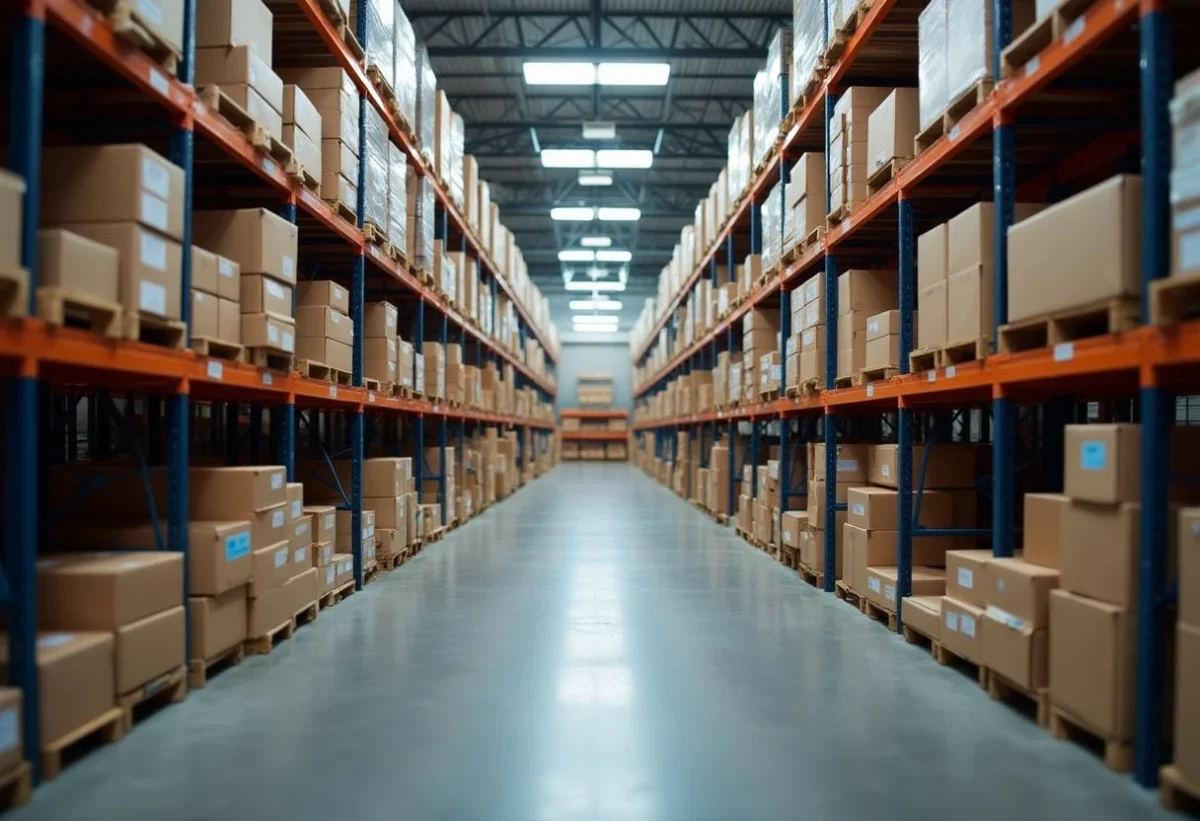
In the modern world, where space is a precious asset and storage needs are becoming increasingly complex, the storage rack emerges as an essential solution for any business looking to maximize its logistical efficiency. Originally designed for industrial environments, these modular systems have transcended their original uses to adapt to various fields, from consumer goods warehousing to archive management. Their popularity is also due to their versatility, robustness, and ability to adapt to the specific constraints of each organization. Given the diversity of options available, understanding the nuances and specific characteristics of storage racks becomes imperative for any entity seeking to optimize its workspace.
The historical evolution of the storage rack
Storage racks have a rich and fascinating history. By examining their evolution, one can better understand how they have adapted to the changing demands of logistics and commerce.
Initially, these structures emerged in the industrial warehouses of the 20th century, where the need to store large quantities of materials efficiently and securely was pressing. Their design aimed to utilize vertical space, a resource often overlooked.
- Initial design: The first racks were often made of wood or metal, emphasizing strength and load capacity.
- Technical innovation: With the advent of new technologies and materials, rack design evolved. Steel became the standard, offering increased robustness.
- Modularity: Today’s rack systems are highly modular, allowing customization based on specific storage needs.
The different types of storage racks
To meet various storage needs, several types of racks have been developed, each with its own characteristics and advantages.
Pallet racks are ubiquitous in warehouses, designed to accommodate heavy and bulky loads. They are particularly effective for storing palletized products, allowing easy access through the use of forklifts.
On the other hand, cantilever racks provide an ideal solution for storing long and cumbersome materials such as pipes and lumber. Their unobstructed structure facilitates loading and unloading from the side.
- Pallet racks: Efficiency and accessibility for palletized products.
- Cantilever racks: Flexibility for long materials.
- Dynamic racks: High-density storage systems using gravity.
Choosing the right storage rack: factors to consider
When it comes to choosing a storage rack, several factors influence the decision, ranging from space constraints to the types of products to be stored.
The first element to consider is the type of product you wish to store. Requirements vary significantly depending on the size, weight, and nature of the goods. Next, space constraints play a crucial role. In environments where space is limited, wise use of verticality becomes paramount.
It is also essential to take into account the workflow in the warehouse. Rack systems must integrate seamlessly into the logistical process, allowing for quick and efficient access to products.
Finally, safety should never be compromised. Opting for certified racks that are regularly inspected ensures the safety of employees and goods.
The economic and environmental benefits of storage racks
Storage racks not only free up space; their use also brings significant economic and environmental benefits.
By maximizing space utilization, they reduce the need for physical expansion of facilities, thereby generating substantial savings. Environmentally, improved storage efficiency decreases the carbon footprint by reducing energy consumption. The modern materials used in the manufacture of racks, often recyclable, enhance this ecological aspect.
Moreover, optimizing storage reduces waste by allowing for better inventory management.
Ultimately, investing in quality rack systems translates into increased durability, extending the lifespan of the equipment and reducing replacement and maintenance costs.