
BMW vehicles often stand out for their adoption of Runflat tires, a technology that allows continued driving even after a puncture. These reinforced tires, thanks to stiffer sidewalls, offer limited but safe mobility over a distance of up to 80 kilometers at a maximum speed of 80 km/h. Designed for demanding drivers, Runflat tires eliminate the need for a spare wheel, thus freeing up space in the trunk and reducing the vehicle’s weight. This feature, while enhancing driving comfort, requires special attention during replacement, as not all garages are equipped to handle these special tires.
The Runflat technology at BMW: safety and performance
Runflat tires are a cornerstone of safety at BMW. This technology, by allowing vehicles to continue their journey even after a loss of pressure, significantly improves the safety of occupants. The TPMS (Tyre Pressure Monitoring System) is essential for Runflat tires, as it alerts the driver in real-time to any drop in pressure, ensuring an appropriate and immediate response. Do not overlook this device: it is the indispensable companion of Runflat tires for a trouble-free drive.
The DriveGuard technology, developed by Bridgestone, expands the scope of Runflat tires by allowing them to be fitted on non-specific vehicles, a significant advancement. Even cars that were not originally designed for this technology can now benefit from its advantages. At BMW, the choice of Runflat BMW: mandatory, aligns with a logic of coherence between the vehicle and its components to ensure an optimal experience.
The design of Runflat tires is based on a reinforced structure, allowing you to drive flat in the event of a puncture. This fact, far from being trivial, transforms a potentially dangerous emergency situation into a mere inconvenience. BMW drivers equipped with these tires can thus reach a safe location to perform the necessary replacement, without being forced to make an immediate and risky stop on the side of the road. Consider this technology not as an option, but as a standard of safety and performance at BMW.
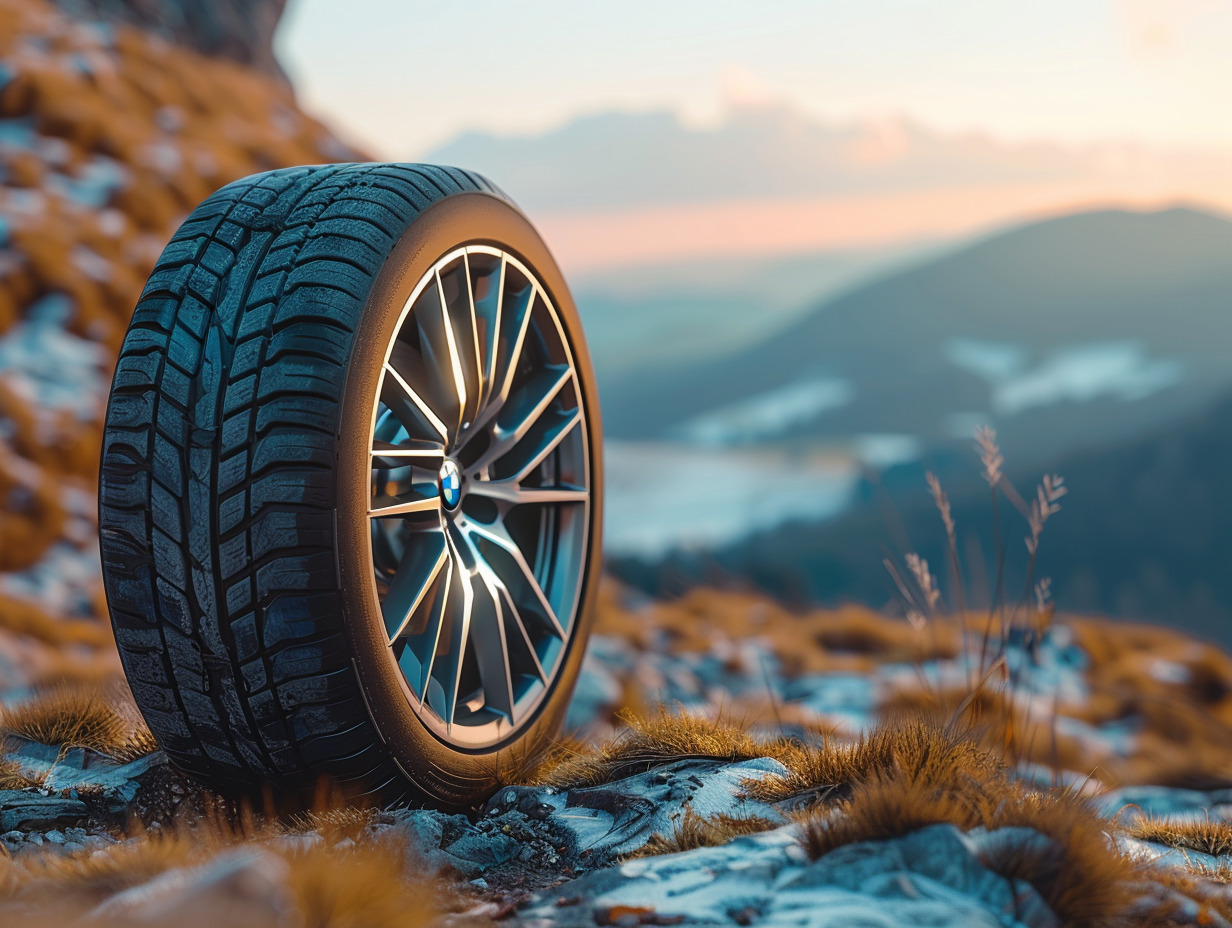
Choosing Runflat tires: criteria and available options
When it comes time to select Runflat tires for a BMW, several criteria should guide your choice. The comfort of driving, often tested by this technology due to the increased stiffness of the sidewalls, must be evaluated based on the type of vehicle—compact cars, sedans, or sports cars—and the usual road conditions—highway, wet pavement, or cobblestone. The perception of comfort can vary significantly based on these parameters, and they should be carefully examined before making a decision.
Moreover, the cost of Runflat tires cannot be ignored. It is generally higher than that of standard tires, an economic reality that must be integrated into the maintenance budget of your car. The installation of these tires requires equipped fitting centers capable of handling their specific structure. Ensure the availability of such services nearby before committing to their purchase.
There is no shortage of options on the market, with brands such as Goodyear, Michelin, Pirelli, Continental, Bridgestone, Dunlop, Hankook, Yokohama, Nokian Tyres, and Federal offering various Runflat tire technologies. Each brand offers characteristics that can influence both the durability and performance of the tire under specific driving conditions. A thorough analysis of the manufacturer’s recommendations and the specifications of each brand is essential to find the Runflat tire that best suits your vehicle and driving needs.